

You searched for a logo designer in Geelong. Fair enough. A logo is the thing you can picture, so it feels like the thing to buy.
Here’s what usually happens next. The logo arrives and it looks good. Then you sit down to build a website, order signage or write an Instagram bio and realise you have nothing to hang it on. No colours that work together, no fonts to use, no sense of how the business should sound. You have a symbol, but you don’t have a brand.
That gap is why the logo vs brand identity question matters more than most owners expect. Get it right and everything you make looks like it came from the same business. Get it wrong and you pay twice: once for the logo and again to fix everything around it.
This guide explains the difference in plain terms, so you can spend your money on the right thing.
What a logo actually is
A logo is one mark. It’s the symbol, wordmark or combination of the two that identifies your business at a glance. Think of the small image on your invoice, your van door or your social profile photo.
When you buy a logo, you typically get:
- The mark itself, in a few versions (full colour, single colour, reversed for dark backgrounds)
- The files, so you can use it on a website, in print and on social
A logo does one job well: it helps people recognise you. What it can’t do is tell them how to feel about you, what you stand for or how you speak to them. That takes more than a mark.
What a brand identity actually is
A logo is what you look like. A brand identity is how you stay recognisable everywhere you show up.
It’s the full system and the logo is one part of it:
- Colour palette: the specific colours you use and how they work together
- Typography: the fonts for headings, body text and detail, so everything feels related
- Tone of voice: how you write and speak, so your website, emails and captions sound like one business
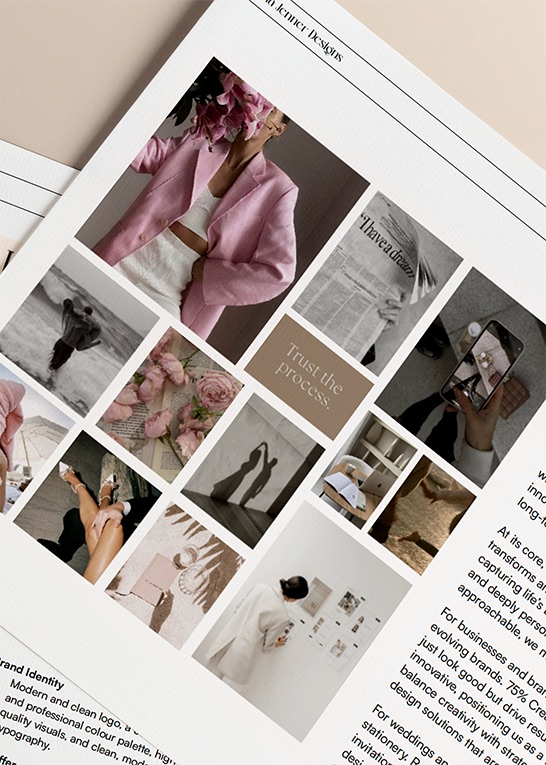
- Photography and imagery style: the look and feel of the photos and graphics you use
- Logo suite: primary, secondary and small-space versions, with clear rules for using them
The best identities sit on top of strategy: who you’re for, what you stand for and how you want to be seen. Without that, the pieces are just decoration.
Here’s a quick test. Put your Instagram, your website and your quote template side by side. Would a stranger know they belong to one business?
Why the confusion happens
Because “logo” has become shorthand for “brand”. Search for a logo designer in Geelong and you’ll find plenty of people selling logos, and few of them explain what comes after. You asked for a logo, so you got one.
Then the gaps show up:
- Your website uses one blue, your flyer another and your socials a third
- You choose fonts from scratch every time you make something
- Your copy sounds different depending on the day and who wrote it
- You can’t brief a printer, photographer or web designer, because there’s nothing to brief them with
None of that means the logo is bad. It means the logo was asked to do a job that needs a system. Every decision gets made again from scratch, which is slow, and the business ends up looking inconsistent. Customers may not be able to say why something feels off, but they notice.
Logo only or brand identity: how to decide
A logo on its own is enough if:
- You’re testing an early idea and aren’t ready to commit to the business yet
- You already have a settled colour palette, fonts and voice, and only the mark is missing
You need a brand identity if:
- You’re building or rebuilding a website
- You market on Instagram, Facebook, Google or in print, so you’re making new things regularly
- You want to charge more, or you’re up against businesses that look more established
- You work with other people (a web designer, photographer or printer) who need to match your look
- The business has outgrown what you started with and the old logo no longer fits
If you ticked more than one item on the second list, a logo alone will leave you with the gaps above.
One more check. Can you say in a sentence who your business is for and why they choose you over the next option? If not, start with strategy. No logo can answer that for you.
Not sure which list you’re on? That’s exactly what a discovery call settles.
How TJD approaches this with every new client
Every project at TJD starts with Discovery, before anything is designed. That’s the difference between strategy-first and design-first. Design-first starts with how it looks and hopes it fits. Strategy-first decides the look from who you’re for and what you want the brand to do, so the result has a commercial reason behind it.
Discovery has three parts: a Brand Discovery Questionnaire, a Strategy Session and a Brand Strategy Document. The questions are plain and specific:
- Who is your best client, and who is the wrong fit?
- What do people say when they recommend you?
- Where do you want the business to be in 12 months?
- How do you want people to feel when they deal with you?
Your answers shape the brand identity: the logo, colours, fonts and voice, each with a written reason tied back to the strategy. If a website is part of the plan, it’s built on that same foundation, so your website works as your best salesperson rather than a brochure.
This isn’t a brand in a day. It’s a considered process that takes the decisions off your plate. And if a logo really is all you need, I’ll tell you.
Let’s work out what you actually need
If you’re a Geelong business owner weighing up a logo against a full brand identity, start with a conversation, not a quote.
Get in touch and we’ll talk through where the business is now, what you want it to do next and whether you need a logo, a full identity or something else. No pressure and no jargon, just a clear answer about where to invest.